Many Kenya safari travelers believe Amboseli is only a dry-season park. That view misses one of the most interesting questions in East African wildlife travel: what happens when the rains return? If you are weighing Amboseli safari wet season wildlife, you are really choosing between two different wet seasons, not one rainy block. The choice shapes what you see, how easy it is to see it, and which Amboseli you bring home in your camera.
When Is the Wet Season in Amboseli?
Amboseli has two wet-season windows: the short rains, usually November and December, and the long rains, generally March through May, with rainfall timing varying by year. January and February are often warmer and comparatively drier, while April and May usually bring the most difficult road conditions and the greatest disruption to game drives.
This matters because Amboseli does not behave like a forest or a coastal beach. It sits in a semi-arid basin beneath Mount Kilimanjaro, so rainfall is patchy and can arrive in short bursts. The short rains tend to green the park quickly. The long rains can leave some areas waterlogged, yet the permanent swamps around Enkongo Narok and Longinye stay productive in both seasons.
If you already have our Amboseli safari guide, use it as your baseline. The bigger question is timing.
What Amboseli Safari Wet Season Wildlife Can You Expect?
Elephants remain the most dependable wet-season sighting because Amboseli’s permanent swamps continue to provide food and water. Visitors can also see zebra, wildebeest, giraffe, buffalo, impala, gazelle, hyena and predators, although animals may spread across greener plains instead of gathering tightly around swamp edges and remaining water sources.
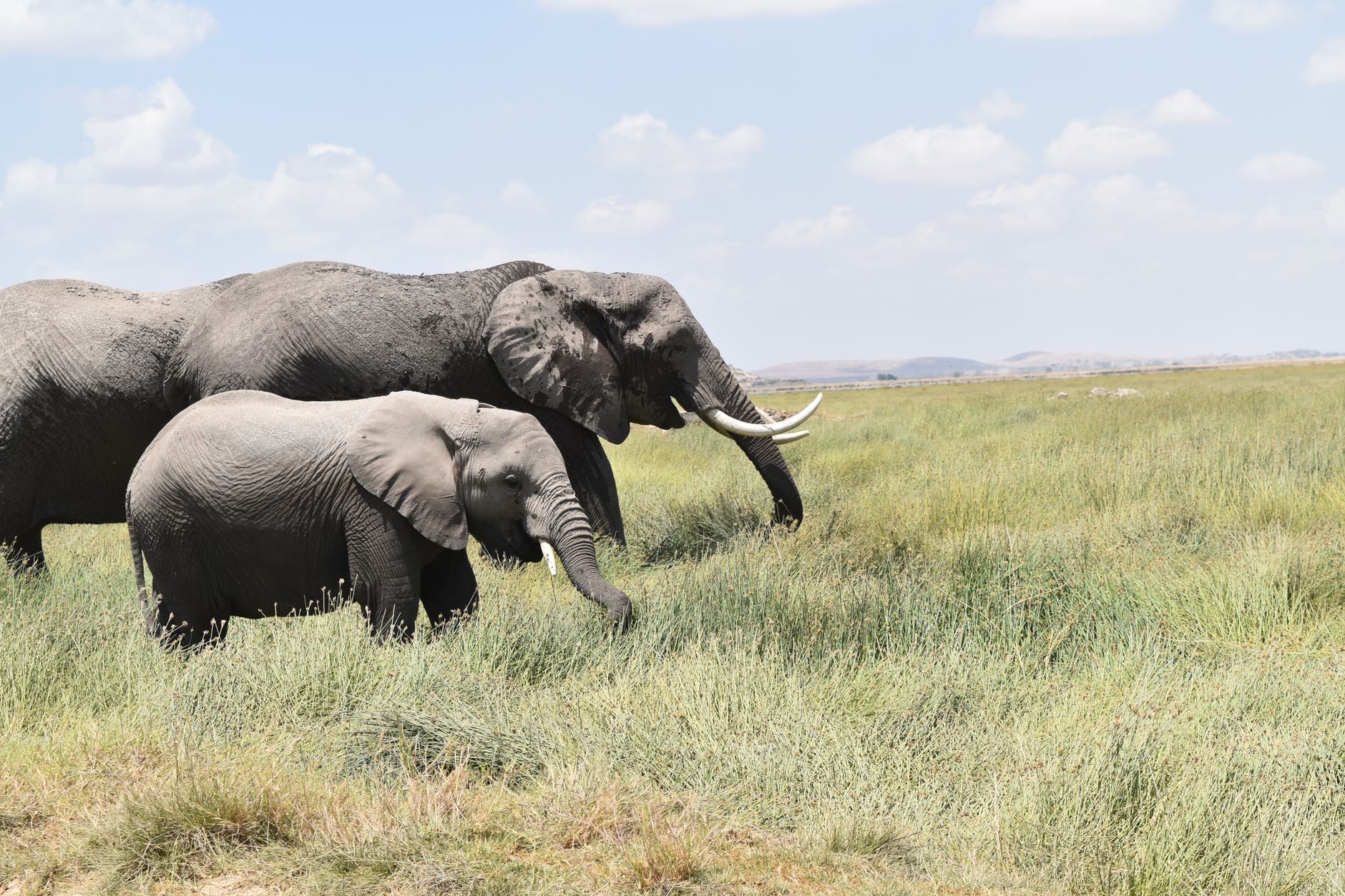
The reliable species list is longer than many visitors expect. On an average wet-season drive you can still find elephant families drinking at the swamp edges, with young calves learning how to use their trunks. Amboseli’s long-term elephant research, carried out by groups such as the Amboseli Trust for Elephants, has made these family herds some of the most studied in Africa. Watching them in December is not a consolation prize. It is one of the park’s core experiences.
Plains game also remains visible. Burchell’s zebra, blue wildebeest, Maasai giraffe, buffalo, impala, Grant’s gazelle and Thomson’s gazelle all use the green grasslands. Lions, cheetahs and hyenas are present, but tall grass makes them harder to spot than in the dry season. Leopards are always elusive, and wet-season vegetation makes them more so.
What changes is location. When rain fills temporary pools, animals do not need to crowd around the same permanent waterholes. If you are on a game drive in November, expect quieter mornings around water and more movement across open plains.
How Does Rain Change Wildlife Viewing?
Rain makes Amboseli greener and can trigger fresh grazing, births and more active wetland life, but it also reduces visibility and spreads mammals across a larger area. Short rains often provide a rewarding balance of scenery and access; heavy long rains can make tracks muddy, limit routes and reduce the reliability of sightings.
In practical terms, wet-season wildlife viewing asks for patience. Animals often feed in small groups rather than in the concentrated herds of late dry season. Predators still hunt, but a lion lying in tall green grass can be very hard to spot until you are close. Wind and cloud can also change where animals choose to stand.
The reward is a less crowded park and a landscape that looks alive. If the grass is green and the seasonal pools are full, even a so-called quiet game drive has visual richness. The trick is to adjust your expectations and give your guide more time to search open drainages instead of fixed waterholes.
Why Are the Short Rains Different From the Long Rains?
The short rains and long rains differ in intensity and timing rather than in color. Short rains usually arrive as showers that green the park in November and December. Long rains bring longer wet spells from March to May, with heavier soil damage and the widest spread of surface water.
| Compare | Short rains, usually November to December | Long rains, usually March to May |
|---|---|---|
| Rain style | Showers and storms, often with dry gaps | More sustained wet periods; April and May can be heavy |
| Landscape | Fresh grass, wet pans and returning greenery | Full greenery; marshes can expand close to roads |
| Wildlife | Elephants, plains game, migrant birds and newborn animals | Elephants and birds remain strong, but many mammals spread across a wider floodplain |
| Road risk | Moderate; black cotton soil can cut after storms | Higher in April and May; route changes and delayed drives are more likely |
| Crowds and rates | Fewer high-season crowds and often lower rates | Very low visitor numbers; some camps close or use lower rates |
For a first wet-season visit, the short rains are the safer choice. The calendar still allows for brilliant wildlife experiences, but the road network and lodge access are far more dependable than in the height of the long rains.
Which Months Work Best for an Amboseli Wet Season Safari?
For most travelers, November and December are the strongest wet-season months because rain is often showery, the grass is fresh, and roads remain passable. April and May offer solitude and bird life, but they carry a much higher risk of muddy tracks and suspended drives.
The month-by-month pattern below is typical, not a weather guarantee. Amboseli’s rain can arrive early or late in any year.
| Month | Typical pattern | Who it suits |
|---|---|---|
| November | Short rains often begin; green color returns; migrant birds start arriving | Travelers who want lower rates and early wet-season scenery |
| December | Greenery peaks; newborn animals and migrant birds are common | First-time wet-season visitors who still want good wildlife |
| January and February | Often drier and less rainy; animals begin to concentrate | Visitors who want a compromise between wet and dry conditions |
| March | Rains may begin; some wildlife still easy to find | Flexible travelers who do not mind showers |
| April and May | Long rains can make roads challenging; bird life is high | Experienced travelers with private 4WD and flexible plans |
| June | Ground dries; mammals gather near permanent water | Travelers ready to move into dry-season safari conditions |
If you have a tight itinerary, November or December gives you the best balance of green scenes and reliable access. If you are more flexible, the long rains can feel like a private safari, but only when your operator can change routes on short notice.
What About Amboseli Bird Watching and Newborn Animals?
Amboseli’s wet season is generally its best birding window, especially from November through April, because migrants join residents and seasonal water attracts waders. The green months also support breeding activity, and many grazing animals time their calves to take advantage of fresh grass.
Amboseli bird watching in the wet season is often more productive than in the dry months. Yellow-billed storks, herons, kingfishers, bustards and many raptors are easier to see around swamps and seasonal pools. If the seasonal Lake Amboseli holds water after good rains, it can draw waders and occasionally flamingos, although the lake is dry for long periods in many years.
Newborn animals are another draw. Zebra and gazelle foals, wildebeest calves and elephant calves are all possible in the wet months. Seeing a young elephant stumble beside its mother in green grass is a different emotional experience from photographing a dusty herd at a dry waterhole. For photographers, the light is softer after rainfall, and the background is more colorful.
Can You See Mount Kilimanjaro During the Wet Season?
Yes, but not as reliably as in the dry season. Rain clears dust from the air, which can make mountain light dramatic in the early morning. Cloud and mist are common during showers, so most wet-season Kilimanjaro views are partial and temporary.
The best strategy is to start game drives early. Mornings after overnight rain often bring clearer air and stunning light on the mountain’s slopes. By midday, cloud can build and hide the summit for hours. Travelers whose main goal is uninterrupted Kilimanjaro photography should weigh that against dry-season months such as January, February, June and July.
Are Amboseli Roads Passable During the Rainy Season?
Many roads remain usable during light rain, but muddy tracks and black cotton soil can become slippery or impassable after heavy rainfall. A reliable 4WD and an experienced local driver are especially important in April and May, when route changes and delayed drives are more likely.
Wet-season road access is the least glamorous part of an Amboseli safari, but it can make or break your trip. Black cotton soil turns into deep mud when saturated. A lodge vehicle with high clearance and a careful driver will know when to stop and wait rather than risk bogging down.
This is also where the choice of camp matters. Ask whether the lodge has vehicles with proper wet-season tires and whether it runs daily road checks. If you prefer not to drive long distances from Nairobi or the coast, a fly-in Amboseli safari can start with much less road risk. Our guide to Amboseli safari lodges covers how camps manage safe water refills, another useful question when you are choosing a wet-season camp.
Wet Season or Dry Season: Which Is the Best Time to Visit Amboseli?
Choose the dry season from June through October if you want mammals concentrated around permanent water and easier driving. Choose the wet season when you value green scenery, birds, newborn animals, fewer visitors and lower prices more than maximum sighting reliability.
For many travelers, the answer is neither extreme. The short rains of November and December offer most of the visual appeal of the wet season while keeping wildlife viewing close to dry-season standards. January and February work the same way, with less rain but still plenty of grass.
If you are still torn between Amboseli and another park, compare how the rain affects each landscape. A side-by-side look at our Masai Mara guide is useful because their wet seasons follow different rhythms and their wildlife concentrations behave differently.
What Do Travelers Usually Ask About Amboseli in the Wet Season?
Is Amboseli good in the wet season?
Yes, particularly during the November-to-December short rains, when the park turns green, migrant birds arrive and newborn animals may be present. Wildlife viewing remains worthwhile, but animals disperse more widely and heavy rain can make some roads difficult, especially in April and May.
What animals can you see in Amboseli during the wet season?
Elephants are usually the most reliable sighting because the park’s permanent swamps remain productive year-round. Wet-season drives can also produce zebra, wildebeest, giraffe, buffalo, impala, gazelle, hyena and predators, although taller grass and abundant water can make mammals harder to locate.
What is the best month to visit Amboseli for wildlife?
For the most concentrated and predictable mammal viewing, June through October is generally strongest, with January and February also offering relatively dry conditions. For wet-season wildlife, November and December are usually a better choice than April and May because access is often easier and the landscape is already greening.
Does it rain all day in Amboseli during the wet season?
No. Wet-season rain often arrives as showers or storms rather than continuous rain, although long-rain periods can bring frequent or prolonged downpours. Early mornings may still provide useful game-drive conditions, but April and May have the highest risk of rain-related delays.
Are Amboseli roads passable during the rainy season?
Many roads remain usable during light rain, but muddy tracks and black cotton soil can become slippery or impassable after heavy rainfall. A reliable 4WD and an experienced local driver are especially important in April and May, when route changes and delayed drives are more likely.
How Should You Choose a Safari Operator for the Wet Season?
A flexible operator matters more in the wet season than in a dry January. Ask whether the vehicle is a proper 4WD, whether the guide knows the swamp and black cotton soil areas, and whether the camp will rework routes day by day instead of sticking to a printed plan.
The best wet-season safari is the one that plans for change. It leaves time for long early-morning drives, keeps a buffer for weather delays, and does not promise a mountain view that no one can control.
If you want to compare options for your dates, start with a clear picture of your priorities and budget. Our guide to Kenya safari costs breaks down wet-season versus dry-season pricing. If newborn animals and fewer crowds matter more to you than near-guaranteed lion sightings, November and December deserve serious thought. Before you commit, take time to compare safari operators such as FindMySafari, Valley Safaris, or Trunktrails Safaris, and use their wet-season advice to choose a package that matches the trade-offs in this guide.
A wet-season Amboseli safari is not the easiest version of the park. It is the most visually alive one. With the right month, the right vehicle, and honest expectations, the green plains can become your favorite memory of Kenya.
Where Can You Find More Safari Planning Resources?
These sister-site guides add more detail on timing a Kenya safari around the rains:
- Best time to visit Kenya map from SafariPure
- Best time to visit Kenya from Trunktrails Safaris
- Best time to visit Kenya month-by-month map from Valley Safaris
- Amboseli destination guide on FindMySafari